
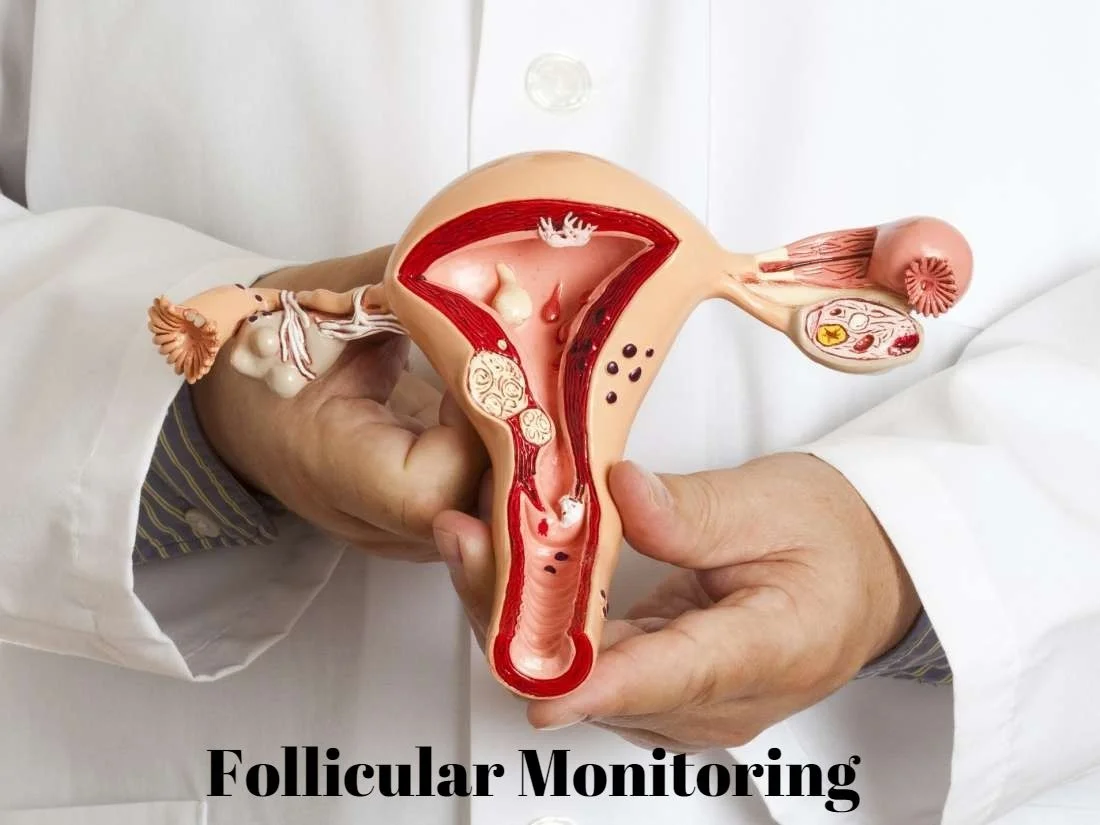
What is Follicular Monitoring?
Follicular monitoring refers to a series of transvaginal ultrasound scans performed throughout a woman’s menstrual cycle to observe the growth and development of ovarian follicles, which contain the eggs.
It helps determine:
When ovulation will occur
Whether the follicles are developing normally
The right time for intercourse or IUI
The correct dosage of fertility medications
Causes of irregular ovulation or infertility
By monitoring the size, number, and quality of follicles, doctors get a clear picture of the woman’s ovulation pattern, improving the chances of natural conception or assisted pregnancy.
Why is Follicular Monitoring Important?
Follicular monitoring is a cornerstone of fertility evaluation and treatment. It provides real-time insight into how the ovaries respond during the menstrual cycle.
Key reasons why follicular monitoring is essential:
1. Accurate Ovulation Tracking
Not all women ovulate regularly. Even women with regular cycles may have delayed or absent ovulation. Monitoring helps detect the exact ovulation period, making conception timing more effective.
2. Personalized Fertility Treatment
Each woman’s ovarian response differs. Monitoring helps doctors tailor:
Ovulation induction medicines
Hormonal doses
Timing for IUI or IVF
Timing intercourse for natural conception
3. Identifying Ovulation Disorders
Conditions like PCOS, thyroid disorders, and hormonal imbalance can affect follicle growth. Follicular scans help detect abnormalities early.
4. Preventing Complications
Tracking follicle size helps prevent:
Ovarian Hyperstimulation Syndrome (OHSS)
Multiple uncontrolled follicle growth
Premature ovulation
5. Monitoring Endometrial Thickness
A healthy uterine lining (endometrium) is essential for embryo implantation. Follicular scanning also checks the growth and quality of the endometrium.
Who Needs Follicular Monitoring?
Follicular monitoring is recommended for women or couples who:
Are trying to conceive naturally
Have irregular periods
Suspect hormonal imbalance
Experience difficulty conceiving
Have PCOS
Are undergoing ovulation induction
Are preparing for IUI or IVF
Have unexplained infertility
Have previously had miscarriages
Have low ovarian reserve
Sparsh Hospital provides individualized monitoring plans based on your medical history and fertility goals.
Follicular Monitoring at Sparsh Hospital: How It Works
At Sparsh Hospital, follicular monitoring is a step-by-step process carried out by expert fertility specialists. It involves multiple scans between Day 2 to Day 18 of the menstrual cycle.
Step-by-Step Process
1. Initial Consultation
Your fertility specialist reviews:
Menstrual history
Previous reports
Ovulation pattern
Hormone levels
You will be guided on when your scans should start.
2. Baseline Scan (Day 2–3)
The first ultrasound scan examines:
Size of the ovaries
Presence of primordial follicles
Antral follicle count
Any cysts or abnormalities
Endometrial thickness
This scan helps determine your ovarian reserve.
3. Follicle Growth Tracking (Day 8–12)
Repeat scans are performed every 1–2 days to check:
Number of growing follicles
Growth rate
Size (ideal mature follicle: 18–22 mm)
Endometrial lining development
If medications are being given, the doctor may adjust the dose based on response.
4. Identifying the Ovulation Window
As the follicle nears maturity, the doctor predicts the exact ovulation time. This is crucial for:
Timed intercourse
IUI procedure timing
Your doctor will guide you about the best days for conception.
5. Trigger Injection (If Needed)
If the follicle is mature but ovulation hasn’t occurred naturally, your doctor may give an HCG trigger injection to ensure timely ovulation.
This is especially useful in:
PCOS
Irregular cycles
IUI cases
Induction cycles
6. Post-Ovulation Scan
After ovulation, a scan confirms:
Follicle rupture
Fluid around ovary
Endometrial changes
This confirms whether ovulation was successful.
Benefits of Follicular Monitoring at Sparsh Hospital
Improves chances of natural conception
Helps detect ovulation problems early
Ensures correct timing for intercourse or IUI
Helps in planning IVF cycles
Provides detailed insight into ovarian health
Helps manage PCOS-related ovulation issues
Reduces miscarriage risk by identifying ovulatory defects
Improves endometrial health tracking
Prevents complications from ovulation induction medications
Follicular Monitoring for Fertility Treatments
1. Natural Conception Tracking
Couples trying naturally can benefit greatly from knowing their fertile window based on real follicular development.
2. Ovulation Induction (OI)
Medications like Letrozole, Clomiphene, or Gonadotropins are used to stimulate follicle growth. Monitoring helps ensure correct response.
3. Intrauterine Insemination (IUI)
Follicular monitoring is essential to time the insemination procedure perfectly.
4. In Vitro Fertilization (IVF)
Even in IVF cycles, monitoring helps assess ovarian response to stimulation injections.
Follicular Monitoring for Women with PCOS
Women with PCOS often have numerous small follicles that do not mature properly. Monitoring helps in:
Detecting dominant follicles
Avoiding multiple pregnancies
Adjusting medication doses
Preventing overstimulation
At Sparsh Hospital, PCOS patients receive specialized ovulation management plans.
Endometrial Assessment During Monitoring
Alongside follicle tracking, our specialists examine the endometrium for:
Thickness
Pattern
Blood flow
Ideal thickness for implantation: 8–12 mm
A healthy lining is essential for embryo implantation.
Frequently Asked Questions (FAQs)
1. Is follicular monitoring painful?
No. It is a simple, painless ultrasound procedure with minimal discomfort.
2. How many cycles of monitoring are needed?
Usually 1–3 cycles, depending on your fertility plan and response.
3. Can follicular monitoring improve natural pregnancy chances?
Yes. By identifying the exact ovulation day, it significantly boosts chances of conception.
4. Is it safe for all women?
Yes. It is completely safe, even for women with PCOS or hormonal imbalance.
5. Do I need to visit the hospital multiple times?
Yes, several scans are required throughout the cycle, but each scan is short and quick.
6. Will I need medication along with monitoring?
Not always. Your doctor will prescribe medicines only if necessary.
7. Does follicular monitoring help in IVF?
Absolutely. It helps evaluate ovarian response and plan stimulation doses.
8. Can it detect infertility causes?
Yes. It helps diagnose ovulation disorders, hormonal issues, and endometrial problems.