
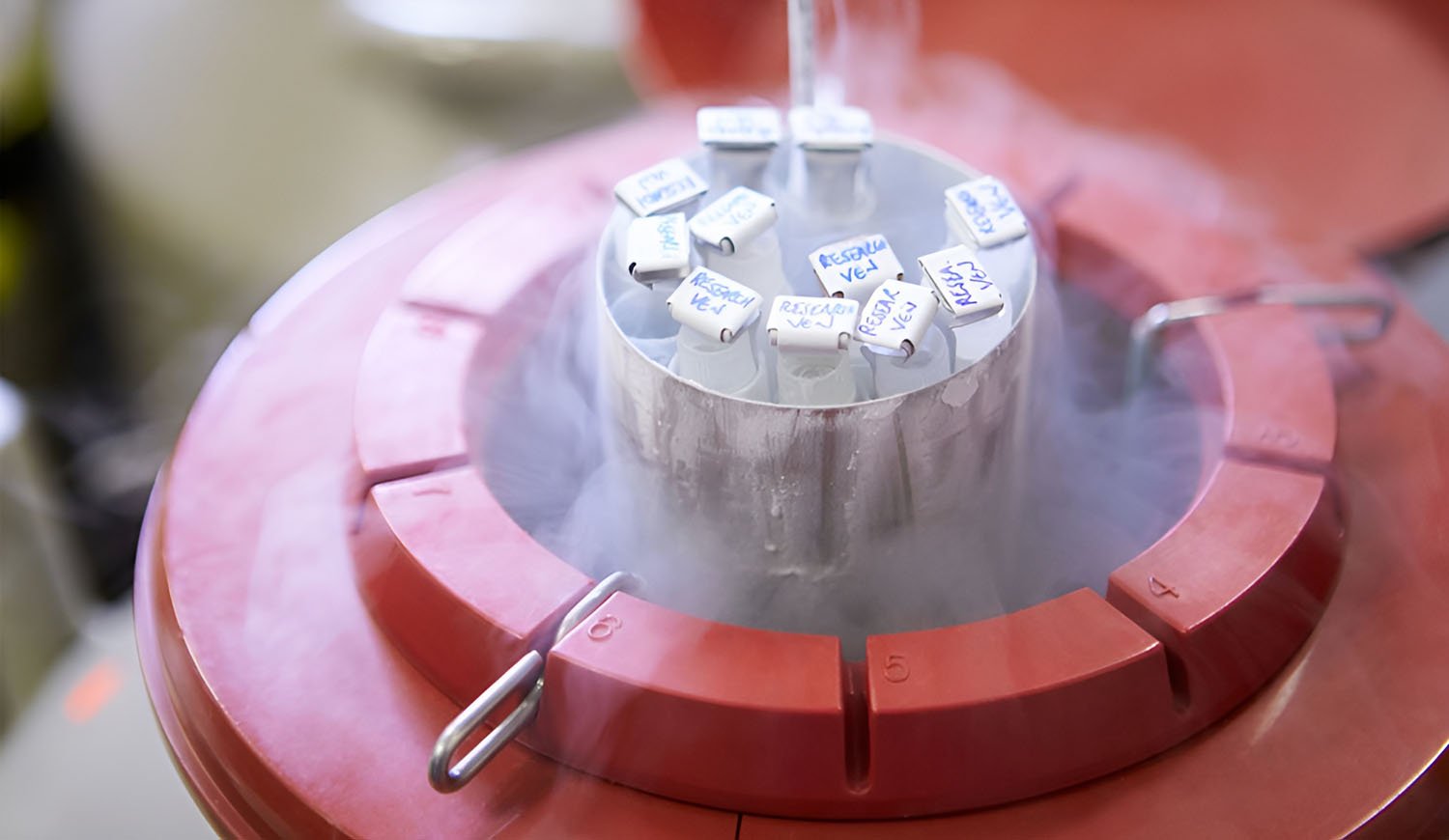
Why people choose to freeze eggs, sperm or embryos
We see patients for cryopreservation for many reasons, broadly grouped into medical and elective categories:
Medical reasons
Planned chemotherapy, radiotherapy or surgery that may damage fertility.
Genetic or medical conditions that may reduce future fertility.
Prior to gender-affirming treatment (hormone/surgery) where fertility preservation is desired.
Elective (social) reasons
Wanting to postpone childbearing for career, education or personal reasons.
No current partner but wish to preserve fertility options.
Couples undergoing IVF who want to store surplus embryos.
Sperm banking has long been a standard option for men facing cancer treatment; it is an effective, well-established method of preserving male fertility.
Why choose Sparsh Hospital for cryopreservation
Experienced fertility team: Reproductive specialists, andrologists and IVF embryologists working together to personalise each plan.
State-of-the-art lab: Adherence to vitrification protocols, strict quality control and secure cryostorage.
Transparent counselling: We explain likely outcomes, costs (procedures + annual storage), timelines and alternative options.
Holistic care: Psychological support, fertility assessment, and long-term storage safeguards.
The procedures — step by step
Egg (oocyte) freezing
Initial assessment: Hormone tests (AMH, FSH, estradiol), pelvic ultrasound and medical history to estimate ovarian reserve.
Ovarian stimulation: Daily injectable hormone medications for ~8–12 days to stimulate multiple follicle development.
Monitoring: Ultrasound and blood tests to track follicle growth.
Egg retrieval (OPU): A minimally invasive procedure performed under conscious sedation to collect mature eggs.
Vitrification: Mature eggs are rapidly frozen using vitrification and placed into secure long-term storage.
Future use: When ready, eggs are thawed and fertilised (usually by ICSI) and embryos transferred in a future cycle.
Egg freezing is most effective when performed at younger ages because egg quality and quantity decline with age; success rates vary with age at retrieval and the number of eggs frozen. Realistic expectations and counselling are essential.
Sperm freezing (semen cryopreservation)
Initial evaluation: Semen analysis and medical screening.
Collection: Produced by masturbation at the clinic or collected at home (with timely transport) depending on circumstances.
Processing & freezing: Semen is mixed with cryoprotectant and frozen in vials or straws; stored in liquid nitrogen tanks.
Future use: Thawed sperm can be used in IUI, IVF or ICSI.
Sperm cryopreservation is simple, cost-effective, and sperm cells can remain viable for many years when stored correctly. It is particularly advised for men before cancer treatment or other procedures that threaten fertility.
Embryo freezing
IVF cycle: Eggs are retrieved, fertilised in the lab, and embryos are cultured for 3–6 days.
Selection & vitrification: High-quality embryos are selected and vitrified for future transfer.
Storage & transfer: Embryos remain in cryostorage until the couple opts for a frozen embryo transfer (FET) cycle.
Embryo vitrification survival rates and pregnancy outcomes have improved substantially; in many cases frozen embryo transfers have outcomes comparable to fresh transfers.
Safety, risks & side effects
Egg retrieval: Generally safe; risks include bleeding, infection and ovarian hyperstimulation syndrome (OHSS) — our monitoring minimises risk.
Medications: Ovarian stimulation side effects are usually mild (bloating, mood shifts); serious complications are rare.
Lab risks: Modern vitrification has dramatically reduced freezing-related damage, but not every egg or embryo survives thawing.
Emotional considerations: Fertility preservation can carry emotional weight — our counsellors support informed decision-making.
We make sure you understand both medical and practical implications before proceeding.
Legal, ethical & storage considerations (India context)
Who should consider cryopreservation?
Women and men diagnosed with cancer or other treatments that may damage fertility.
Individuals planning to delay childbearing for personal or professional reasons.
Couples undergoing IVF who wish to bank surplus embryos.
Transgender individuals considering gender-affirming treatment who wish to preserve fertility.
If you’re unsure, book a fertility preservation consultation — a single visit can clarify options, costs and likely outcomes.