
Advanced IVF Technology to Improve Implantation Success
What Is Laser-Assisted Hatching?
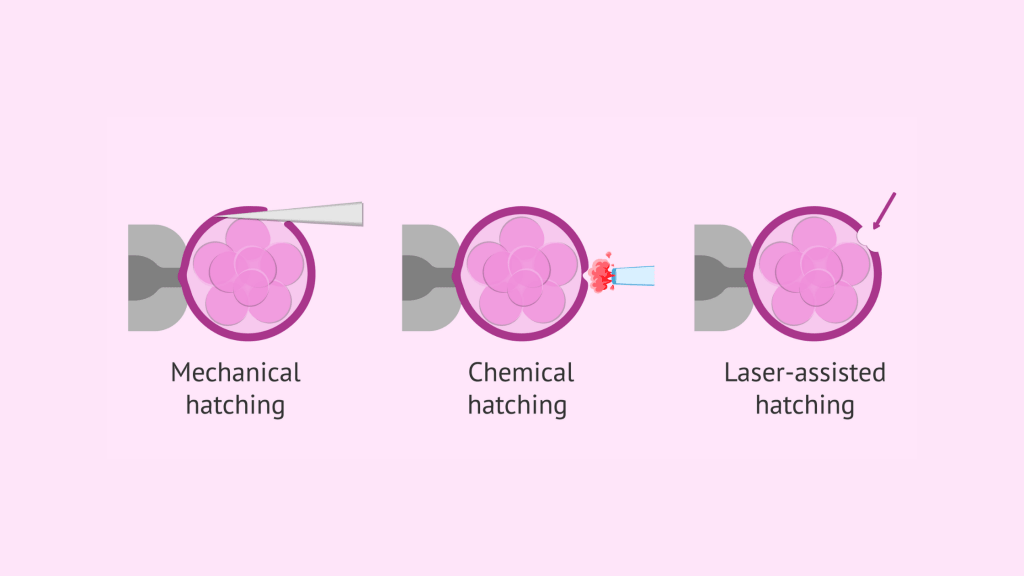
Laser-Assisted Hatching is a specialized laboratory procedure used during In Vitro Fertilization (IVF). In this technique, a precise laser is used to create a small opening or thinning in the zona pellucida, which is the protective outer shell surrounding an embryo.
Normally, after fertilization, an embryo must “hatch” from this outer layer before it can implant into the uterus. However, in some cases, the zona pellucida may be thicker or harder, making implantation more difficult. Laser-Assisted Hatching helps overcome this barrier, thereby increasing the likelihood of embryo implantation.
Why Is Hatching Important for Pregnancy?
For a pregnancy to occur, the embryo must successfully implant into the uterine lining. Before implantation, the embryo needs to break free from its outer shell. This natural process is called hatching.
However, implantation may fail when:
The embryo’s outer shell is unusually thick
The embryo quality is compromised
Maternal age is advanced
Embryos have been frozen and thawed
Therefore, Laser-Assisted Hatching supports this critical step, helping the embryo attach more easily to the uterus.
Who Can Benefit from Laser-Assisted Hatching?
Laser-Assisted Hatching is not required for every IVF patient. At Sparsh Hospital, our fertility specialists carefully evaluate each case before recommending this procedure.
You may benefit from Laser-Assisted Hatching if you:
Are above 35 years of age
Have experienced repeated IVF failures
Have poor embryo implantation history
Are using frozen embryos (FET cycles)
Have embryos with a thick zona pellucida
Have unexplained infertility
Have poor embryo development in previous cycles
Because every fertility journey is unique, our specialists personalize treatment plans to achieve the best outcomes.
How Does Laser-Assisted Hatching Work?
Laser-Assisted Hatching is performed in a highly controlled embryology laboratory by trained fertility experts.
Step-by-Step Process:
Embryo Selection
After fertilization, high-quality embryos are carefully selected by the embryologist.Laser Application
A specialized medical laser is used to make a tiny opening or thinning in the zona pellucida. This is done with extreme precision to avoid any damage to the embryo.Embryo Transfer
The treated embryo is then transferred into the uterus, where it has a higher chance of successful implantation.
The entire process is quick, painless, and performed outside the body, ensuring maximum safety.
Advantages of Laser-Assisted Hatching
Laser-Assisted Hatching offers several benefits, especially for selected patients:
Improves embryo implantation rates
Enhances pregnancy success in IVF cycles
Particularly beneficial for frozen embryo transfers
Helps overcome age-related implantation issues
Highly precise and controlled procedure
Minimal risk when performed by experts
As a result, LAH has become an important tool in modern fertility treatment.
Is Laser-Assisted Hatching Safe?
Yes, Laser-Assisted Hatching is considered safe and effective when performed by experienced embryologists. At Sparsh Hospital, we follow strict laboratory protocols and international fertility standards to ensure patient safety.
Key safety aspects include:
Use of advanced laser technology
Highly trained embryology team
Minimal manipulation of the embryo
Continuous quality monitoring
Moreover, extensive clinical experience has shown that LAH does not increase the risk of birth defects when performed appropriately.
Laser-Assisted Hatching and Frozen Embryo Transfer (FET)
Success Rates of Laser-Assisted Hatching
While Laser-Assisted Hatching does not guarantee pregnancy, studies show that it can significantly improve implantation rates in selected patients.
Success depends on several factors, including:
Maternal age
Embryo quality
Underlying fertility issues
Overall reproductive health
Expertise of the fertility clinic
At Sparsh Hospital, we combine advanced technology with personalized care to optimize success rates.