
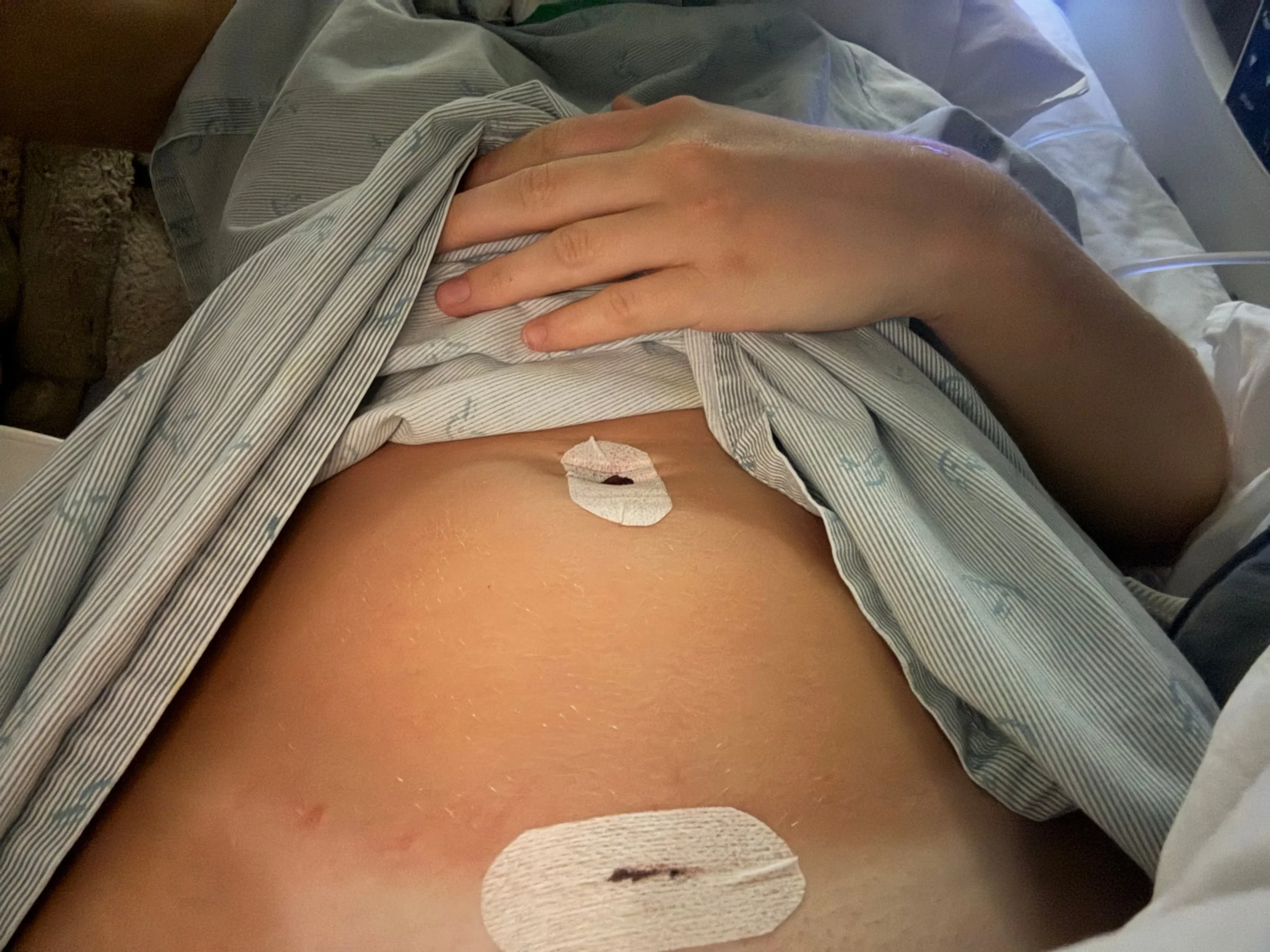
Left untreated, endometriosis can progress and cause:
-
Persistent pain that affects quality of life and daily activities.
-
Progressive scarring and adhesions that distort pelvic anatomy.
-
Reduced ovarian reserve or tubal damage leading to fertility challenges.
Who should consider endometriosis surgery?
Surgery is usually considered when:
Symptoms (pain, bleeding, bowel/bladder symptoms) do not respond to medical therapy, or
There is suspected deep infiltrating endometriosis (DIE) involving bowel, bladder, or ureters, or
Ovarian endometriomas (chocolate cysts) are present and symptomatic or large, or
There are fertility concerns and conservative surgery may improve chances of conception, or
Diagnostic laparoscopy is needed to confirm the diagnosis and stage disease.
At Sparsh Hospital, every candidate for surgery receives a thorough evaluation by our gynecology team and, if needed, a multidisciplinary review that may include colorectal surgeons, urologists, pain specialists, and fertility experts.
Diagnosis — how we confirm endometriosis
Accurate diagnosis is the cornerstone of effective treatment. At Sparsh Hospital we use a combination of:
Detailed clinical evaluation — history-taking focused on symptom patterns (cycle-related pain, bowel/bladder symptoms, infertility) and physical pelvic examination.
Imaging — transvaginal ultrasound (TVUS) is the first-line imaging tool and is especially useful for identifying ovarian endometriomas and some deep lesions. When required, pelvic MRI provides high-resolution mapping of deep infiltrating disease.
Diagnostic laparoscopy — the gold standard for diagnosis. Laparoscopy allows direct visualization of lesions and adhesions and enables tissue biopsy for histological confirmation. Importantly, it also provides an opportunity for simultaneous surgical treatment.
Surgical options at Sparsh Hospital
We tailor surgical management to each patient’s disease extent, symptoms, age, and fertility goals. Our surgical techniques prioritize symptom relief while conserving reproductive potential whenever possible.
1. Diagnostic and operative laparoscopy (minimally invasive)
What it is: Small incisions and camera-guided instruments to visualize and remove endometriotic implants, ablate lesions, and release adhesions.
Benefits: Less pain after surgery, quicker recovery, shorter hospital stay, and better cosmetic outcomes compared with open surgery.
Typical procedures: Excision or ablation of superficial implants, ovarian cystectomy for endometriomas, adhesiolysis, and limited resection of deep lesions.
2. Advanced laparoscopic excision for deep infiltrating endometriosis (DIE)
What it is: Precise excision of deep nodules from the bowel, bladder, ureter, or uterosacral ligaments, often performed in coordination with colorectal or urology teams.
Benefits: Complete excision of deep disease can substantially reduce pain and improve function. Collaboration with other surgical specialties reduces complication risk.
3. Laparoscopic ovarian cystectomy (endometrioma removal)
What it is: Removal of ovarian endometriomas while preserving as much healthy ovarian tissue as possible.
Why it matters: Proper technique minimizes damage to ovarian reserve and improves pain and fertility outcomes.
4. Robotic-assisted surgery (where available and appropriate)
What it is: A minimally invasive option that uses robotic instrumentation for enhanced precision and ergonomics during complex dissections.
Benefits: Improved dexterity and 3D visualization can be helpful for very deep or anatomically complex disease.
5. Hysterectomy (definitive surgery)
When considered: Reserved for women with severe disease who have completed childbearing and who have not responded to conservative surgery or medical therapy. Hysterectomy may include removal of both ovaries (bilateral salpingo-oophorectomy) depending on the individual case, and requires careful counseling regarding hormonal consequences.
Why Sparsh Hospital for endometriosis surgery?
Multidisciplinary team: Our care model brings together experienced gynecologic surgeons, fertility specialists, colorectal surgeons, urologists, pain medicine experts, and physiotherapists to deliver comprehensive, patient-centered treatment plans.
Minimally invasive expertise: Surgeons at Sparsh are skilled in advanced laparoscopy and, when appropriate, robotic-assisted techniques — aiming for maximal disease clearance with minimal trauma.
Fertility-preserving focus: For patients who wish to conceive, our surgeons use conservative, tissue-sparing techniques and coordinate care with reproductive medicine specialists.
Individualized recovery plans: We provide tailored post-operative rehabilitation, pain management, and physiotherapy to speed recovery and restore function.
Evidence-based care and compassionate support: We combine the latest evidence and surgical standards with counseling and support services for long-term symptom management.
The surgical journey — step by step
Pre-operative phase
Comprehensive assessment: Medical history, imaging (TVUS, MRI if needed), blood tests, and anesthesia evaluation.
Counseling: Detailed discussion about the planned procedure, expected benefits, potential risks, effect on fertility, and alternatives (medical management, assisted reproduction).
Optimization: Management of anemia, control of comorbid conditions, and prehab advice (nutrition, smoking cessation, pelvic physiotherapy when indicated).
Day of surgery
Admission and anesthesia: Most procedures are performed under general anesthesia. Minimally invasive approaches typically require brief hospital stays — often day-care or 1–2 nights depending on complexity.
Surgical procedure: Performed by an experienced surgical team with intraoperative decision-making focused on disease clearance and organ preservation. If deep disease involves bowel or bladder, a coordinated approach with the relevant specialist is used.
Post-operative care
Immediate recovery: Pain is managed with multimodal analgesia. Early ambulation and breathing exercises are encouraged to reduce complications.
Discharge planning: Most patients go home within 24–72 hours for uncomplicated laparoscopic surgery. Detailed instructions on wound care, activity restrictions, medications, and emergency signs are provided.
Follow-up: Clinic visit within 1–2 weeks to review healing, pathology (if biopsy performed), and long-term management plan.
Recovery and rehabilitation
First 48–72 hours: Expect moderate discomfort managed with oral pain medication. Avoid strenuous activity and heavy lifting.
Week 1–2: Gradual return to light activities and work depending on the job. Pelvic physiotherapy may be recommended to restore pelvic floor function.
4–6 weeks: Most patients can resume normal activities, exercise, and sexual activity as advised by the surgeon.
Long-term: Pain improvement may be gradual. Ongoing medical therapy (hormonal suppression) or fertility treatment may be discussed depending on individual goals.
Medical management after surgery
Surgery often works best combined with medical therapy to reduce recurrence risk and control symptoms. Options include:
Continuous hormonal therapies (combined oral contraceptives, progestins) to suppress menstrual cycles.
Gonadotropin-releasing hormone (GnRH) analogues for short-term suppression in selected cases.
Add-on pain management strategies and lifestyle measures.
Your Sparsh care team will personalize post-operative medical plans based on pathology, symptom control, and fertility intentions.
Fertility and endometriosis
Endometriosis can affect fertility in several ways: ovarian endometriomas, pelvic adhesions, tubal dysfunction, and an inflammatory pelvic environment. At Sparsh Hospital:
Fertility-preserving surgery aims to remove disease while conserving ovarian tissue.
Fertility counseling is provided pre- and post-operatively to weigh options such as timed intercourse, ovulation induction, intrauterine insemination (IUI), or in vitro fertilization (IVF).
Collaboration with reproductive medicine specialists ensures seamless transition to assisted reproductive technologies when indicated.
How to prepare for your visit at Sparsh Hospital
Bring medical records — previous imaging, ultrasound/MRI reports, and any prior surgical or pathology reports.
List of medications and allergies — including hormonal therapies you may be taking.
Questions for your team — prepare a list of concerns about fertility, pain expectations, and recovery.
Support person — arrange for a companion to help with transportation after surgery.