
What Is ERA Testing?
Why ERA Testing Is Important
Although IVF technology has advanced significantly, implantation failure remains a major challenge. In many cases, the embryo quality is good, yet pregnancy does not occur. This is where ERA testing becomes crucial.
Key Benefits of ERA Testing:
Identifies the exact implantation window
Improves IVF success rates
Reduces repeated implantation failure
Helps personalize fertility treatment
Prevents unnecessary IVF cycles
Supports informed clinical decisions
As a result, ERA testing provides clarity, confidence, and customized treatment planning for patients.
Who Should Consider ERA Testing?
ERA testing is especially recommended for women who have experienced repeated IVF failures despite transferring good-quality embryos. However, it can also benefit others who want to maximize IVF success.
Ideal Candidates for ERA Testing:
Women with recurrent implantation failure (RIF)
Patients with 2 or more failed IVF cycles
Women with unexplained infertility
Patients with thin or irregular endometrial lining
Women planning frozen embryo transfer (FET)
Couples seeking personalized IVF care
Therefore, if standard IVF protocols have not worked, ERA testing at Sparsh Hospital can provide critical insights.
How ERA Testing Works
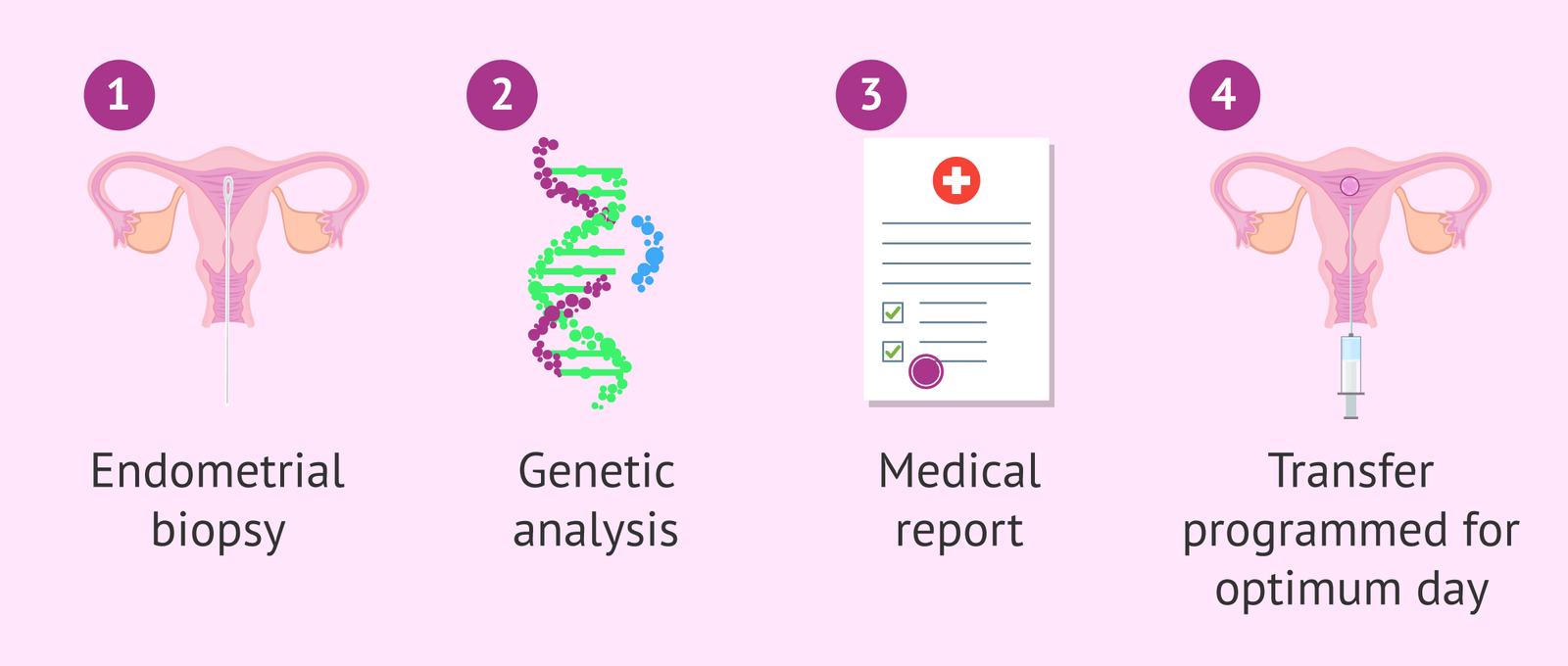
ERA testing is a simple yet powerful process that analyzes gene expression in the endometrial tissue.
Step-by-Step ERA Testing Process:
1. Endometrial Preparation
First, the uterus is prepared using hormonal medication similar to an IVF cycle. This mimics the natural conditions required for implantation.
2. Endometrial Biopsy
Next, a small tissue sample is taken from the uterine lining on a specific day. This procedure is quick, safe, and performed on an outpatient basis.
3. Genetic Analysis
The biopsy sample is sent to a specialized laboratory where over 200 genes related to implantation are analyzed.
4. Result Interpretation
Based on gene expression, the endometrium is classified as:
Receptive
Pre-receptive
Post-receptive
5. Personalized Embryo Transfer
Finally, embryo transfer is scheduled exactly during the patient’s personalized implantation window.
Thus, ERA testing ensures the embryo meets the uterus at the perfect time.
Is ERA Testing Painful or Risky?
ERA testing is minimally invasive and generally well tolerated. Most patients experience mild cramping similar to menstrual discomfort. Moreover, the procedure is safe, with no long-term risks or impact on future fertility.
Safety Highlights:
Outpatient procedure
No anesthesia required
Minimal discomfort
No hospital admission
Quick recovery
Hence, ERA testing is both patient-friendly and clinically effective.
Accuracy and Reliability of ERA Testing
ERA testing is backed by extensive scientific research and clinical data. It has shown high accuracy in determining endometrial receptivity, especially in women with implantation failure.
Clinical Advantages:
Objective genetic evaluation
Highly reproducible results
Evidence-based personalization
Reduces trial-and-error IVF attempts
Therefore, ERA testing represents a major step toward precision fertility medicine.
ERA Testing vs Traditional IVF Timing
| Traditional IVF | ERA Testing |
|---|---|
| Fixed embryo transfer day | Personalized transfer timing |
| Assumes standard receptivity | Identifies individual receptivity |
| Higher implantation failure risk | Improved implantation success |
| Trial-and-error approach | Data-driven precision |
As shown above, ERA testing offers a more reliable and customized solution.
ERA Testing at Sparsh Hospital – Why Choose Us?
At Sparsh Hospital, we are committed to providing advanced, ethical, and personalized fertility care. Our fertility specialists combine medical expertise with compassionate care to help couples achieve their dream of parenthood.
Why Sparsh Hospital for ERA Testing?
Experienced fertility and IVF specialists
Advanced reproductive technology
Personalized treatment protocols
Evidence-based clinical decisions
State-of-the-art laboratory support
Patient-centered care approach
Moreover, our team ensures that every patient understands the procedure, results, and next steps clearly.