
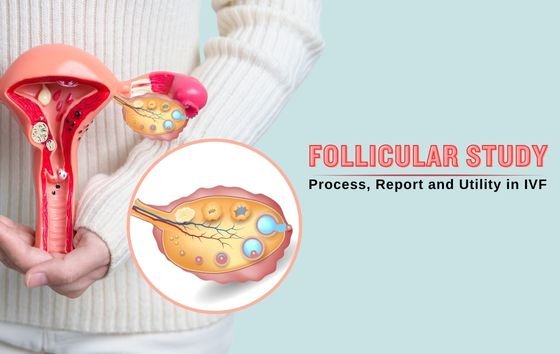
A follicular study helps your doctor understand:
When you are likely to ovulate
Whether the egg is developing properly
If the uterus is ready for conception
The best time for intercourse or fertility treatments
Our team ensures a comfortable, safe, and precise scanning experience to support your fertility journey with confidence and clarity.
What Are Ovarian Follicles?
Ovarian follicles are tiny fluid-filled sacs inside the ovaries that contain immature eggs. Each month, multiple follicles begin to grow, but usually only one follicle becomes dominant and releases a mature egg during ovulation.
A follicular study tracks:
How many follicles are growing
How fast they are growing
Whether they reach the optimal size (18–24 mm)
Whether ovulation has occurred
This detailed understanding helps doctors plan the perfect timing for conception.
Why Follicular Study Is Important
Many couples trying to conceive struggle because they do not know the exact timing of ovulation. Follicular monitoring solves this problem by visually tracking the entire ovulation process.
Key benefits include:
✔ Accurate ovulation prediction
✔ Helps identify irregular cycles
✔ Helps diagnose anovulation (no egg release)
✔ Determines best timing for intercourse
✔ Essential for IUI and IVF planning
✔ Helps evaluate response to fertility medications
✔ Detects problems like PCOS or luteal phase defects
At Sparsh Meditunes Hospital, this study forms the foundation of your personalized fertility plan.
Who Needs a Follicular Study?
A follicular study is recommended for women who:
Have irregular periods
Are trying to conceive for more than 6–12 months
Have PCOS (Polycystic Ovary Syndrome)
Have hormonal imbalances
Have undergone miscarriages
Are preparing for IUI or IVF
Have symptoms of anovulation
Are above 30 and planning pregnancy
Our fertility specialists evaluate your medical history and suggest a tailored monitoring plan.
How Follicular Study Is Performed at Sparsh Meditunes Hospital
Follicular monitoring is done through transvaginal ultrasound because it provides the most accurate and clear view of the reproductive organs.
The step-by-step process includes:
Day 2–3 of the cycle:
Baseline scan
Assessment of ovaries
Check for cysts
Evaluate endometrial thickness
Day 9–11 onwards:
Regular ultrasounds are done every 2–3 days to track
Follicle size
Number of growing follicles
Growth rate
Uterine lining thickness
Around Day 12–16:
Follicle reaches 18–24 mm (optimal for ovulation)
Endometrium becomes trilaminar and thick (ideal for implantation)
Your doctor advises the best timing for intercourse or IUI
After Ovulation:
A final scan may be done to confirm:
Follicle rupture
Presence of corpus luteum
Post-ovulation endometrial pattern
6. How Long Does the Follicular Study Take?
Follicular monitoring typically spans 7–10 days, depending on
Your cycle length
Follicle growth pattern
Whether fertility medications are used
Each scan takes only 5–10 minutes and is completely safe and painless.
Follicle Sizes and What They Indicate
Understanding follicle size helps plan the correct timing for conception.
| Follicle Size (mm) | Meaning |
|---|---|
| 2–8 mm | Start of cycle (early follicular phase) |
| 8–12 mm | Slow growth phase |
| 13–16 mm | Moderate growth, approaching maturity |
| 17–20 mm | Ideal size for ovulation induction |
| 20–26 mm | Ovulation expected anytime |
| Collapsed follicle | Ovulation completed |
Endometrial Thickness and Its Importance
A healthy uterine lining is essential for implantation.
Ideal ranges:
7–14 mm thickness
Trilaminar appearance
Smooth texture
If the lining is thin, your doctor may prescribe:
Estrogen supplements
Nutritional guidance
Blood flow improvement medications
Lifestyle changes
Follicular Study for IUI
In IUI, correct timing is everything. The follicular study helps:
Decide the day of HCG trigger injection
Schedule the exact day for IUI procedure
Improve success chances significantly
Our fertility experts ensure a carefully planned and perfectly timed process.
Follicular Study for IVF
For IVF patients, follicular monitoring helps:
Track response to stimulation injections
Adjust medication dose
Decide egg retrieval timing
Ensure follicles mature uniformly
Our high-resolution ultrasound technology ensures every cycle is monitored with precision.
Can Follicular Study Help Diagnose Fertility Problems?
It is one of the most reliable tools to identify:
Delayed ovulation
No ovulation
Poor follicle development
Endometrium issues
PCOS
Luteinized unruptured follicle syndrome (LUFS)
Hormonal imbalances
Early detection helps timely treatment.
How to Prepare for a Follicular Study
No major preparation is required, but the following help:
Stay hydrated
Maintain a healthy diet
Avoid stress
Follow your doctor’s medication instructions
Attend all scheduled scans
Because timing is important, missing a scan may delay treatment or affect results.
Follicular Study + Ovulation Induction
For women with irregular cycles or PCOS, fertility medicines may be prescribed (Clomiphene, Letrozole, or Gonadotropins).
Follicular study helps control the exact dosage by monitoring how your body responds.
This prevents:
Ovarian Hyperstimulation
Overgrowth of follicles
Multiple pregnancy risks