
What Is Preimplantation Genetic Testing (PGT)?
At Sparsh Hospital, we provide two major types of PGT:
PGT-A (Preimplantation Genetic Testing for Aneuploidy)
PGT-M (Preimplantation Genetic Testing for Monogenic Disorders)
What Is PGT-A?
PGT-A is used to check embryos for chromosomal abnormalities, also known as aneuploidy. Normally, embryos should have 46 chromosomes. However, sometimes embryos may have extra or missing chromosomes, which can lead to failed implantation, miscarriage, or genetic conditions such as Down syndrome.
Therefore, PGT-A helps identify embryos with the correct number of chromosomes.
Traditionally, embryo transfer is done based on average timelines. However, research shows that nearly 25–30% of women have a displaced implantation window. Therefore, ERA testing helps personalize embryo transfer timing, which can be a game-changer in fertility success.
Who Should Consider PGT-A?
PGT-A is especially beneficial for:
Women aged 35 years and above
Couples with recurrent miscarriages
Patients with repeated IVF failures
Couples using donor eggs or sperm
Those seeking to improve IVF success rates
Consequently, PGT-A allows for better embryo selection and improved pregnancy outcomes.
Benefits of PGT-A at Sparsh Hospital
Higher chances of successful embryo implantation
Reduced risk of miscarriage
Improved IVF success rates
Reduced time to pregnancy
Single embryo transfer with better outcomes
Thus, PGT-A not only increases success but also promotes safer pregnancies.
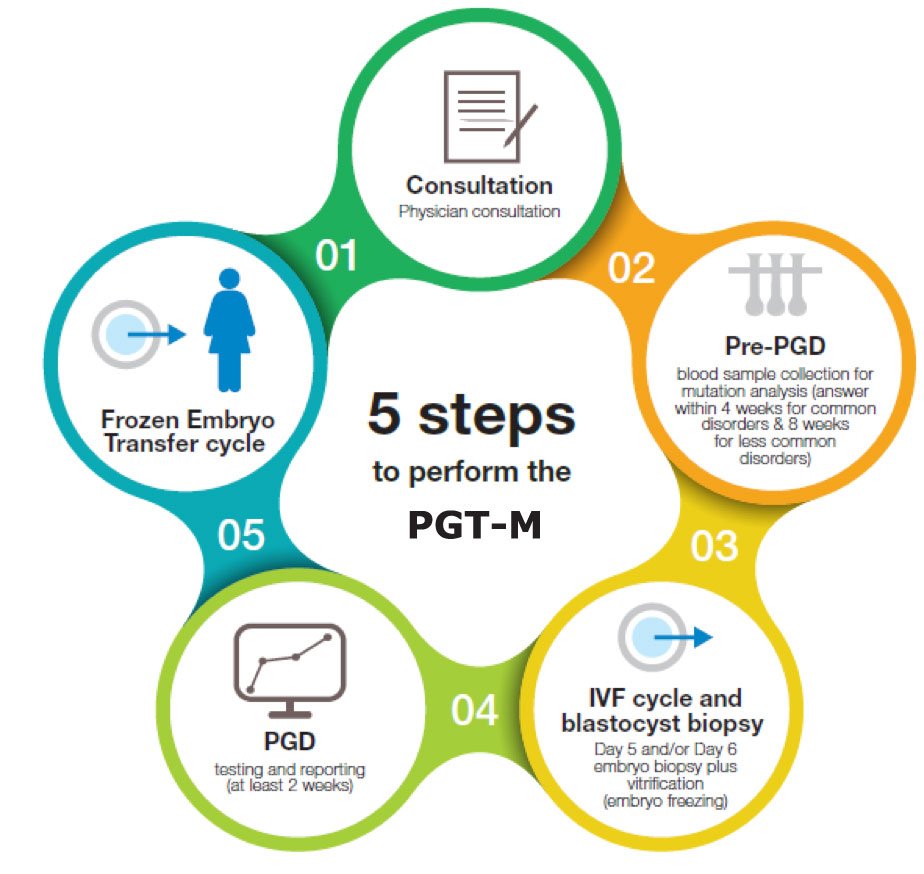
What Is PGT-M?
Genetic Conditions Screened by PGT-M
PGT-M can screen for many inherited disorders, including:
Thalassemia
Sickle cell anemia
Cystic fibrosis
Spinal muscular atrophy
Hemophilia
Huntington’s disease
Tay-Sachs disease
Muscular dystrophy
As a result, couples with a family history of genetic diseases can plan a healthier future for their child.
Who Should Consider PGT-M?
PGT-M is recommended for:
Couples who are carriers of genetic disorders
Individuals with a family history of inherited diseases
Couples with a previously affected child
Consanguineous marriages
Couples undergoing IVF with known genetic risks
Therefore, PGT-M offers reassurance and control over genetic health.
How Is PGT Performed at Sparsh Hospital?
At Sparsh Hospital, PGT is performed using a highly accurate and systematic approach.
Step-by-Step Process
IVF Treatment
First, eggs are retrieved and fertilized with sperm in the laboratory.Embryo Development
Next, embryos are cultured for 5–6 days until they reach the blastocyst stage.Embryo Biopsy
A few cells are carefully removed from each embryo without harming its development.Genetic Analysis
The biopsied cells are sent for advanced genetic testing.Embryo Freezing
Meanwhile, embryos are safely frozen while awaiting results.Embryo Transfer
Finally, only genetically healthy embryos are transferred in a later cycle.
Thus, the entire process is safe, precise, and patient-centric.
Accuracy and Safety of PGT
PGT-A and PGT-M are highly accurate, with reliability rates exceeding 95–98%. Moreover, embryo biopsy is considered safe when performed by skilled embryologists, as done at Sparsh Hospital.
However, genetic counseling is provided to ensure patients understand:
The benefits and limitations of testing
Possible outcomes
Ethical and emotional considerations
Therefore, couples receive complete clarity before proceeding.
Why Choose Sparsh Hospital for Genetic Testing?
Expertise You Can Trust
Sparsh Hospital is known for excellence in fertility care and genetic diagnostics. Our team includes:
Experienced fertility specialists
Trained genetic counselors
Skilled embryologists
Advanced laboratory technicians
As a result, every patient receives expert-led care.
Advanced Technology
We use:
International-standard IVF laboratories
Latest genetic sequencing technologies
Strict quality control protocols
Hence, accuracy and safety are never compromised.
Personalized Patient Care
At Sparsh Hospital:
Each treatment plan is customized
Emotional support is prioritized
Ethical practices are strictly followed
Therefore, patients feel supported throughout their journey.
Success Rates with PGT at Sparsh Hospital
By selecting genetically healthy embryos, PGT significantly improves:
Implantation rates
Ongoing pregnancy rates
Live birth rates
Additionally, it reduces the emotional and financial burden of repeated IVF cycles. Consequently, couples experience faster and more successful outcomes.
PGT and Ethical Considerations
At Sparsh Hospital, we strictly adhere to ethical and legal guidelines. PGT is never used for non-medical gender selection. Instead, it is focused solely on:
Preventing genetic diseases
Improving pregnancy outcomes
Supporting healthy family planning
Thus, patient trust and ethical responsibility remain our top priorities.
Emotional Support and Genetic Counseling
Undergoing genetic testing can be emotionally challenging. Therefore, Sparsh Hospital offers:
Pre-test genetic counseling
Post-test result discussions
Emotional and psychological support
As a result, couples feel confident, informed, and emotionally prepared.