
Restoring Fertility with Advanced Care & Expertise
What Is Tubal Recanalization?
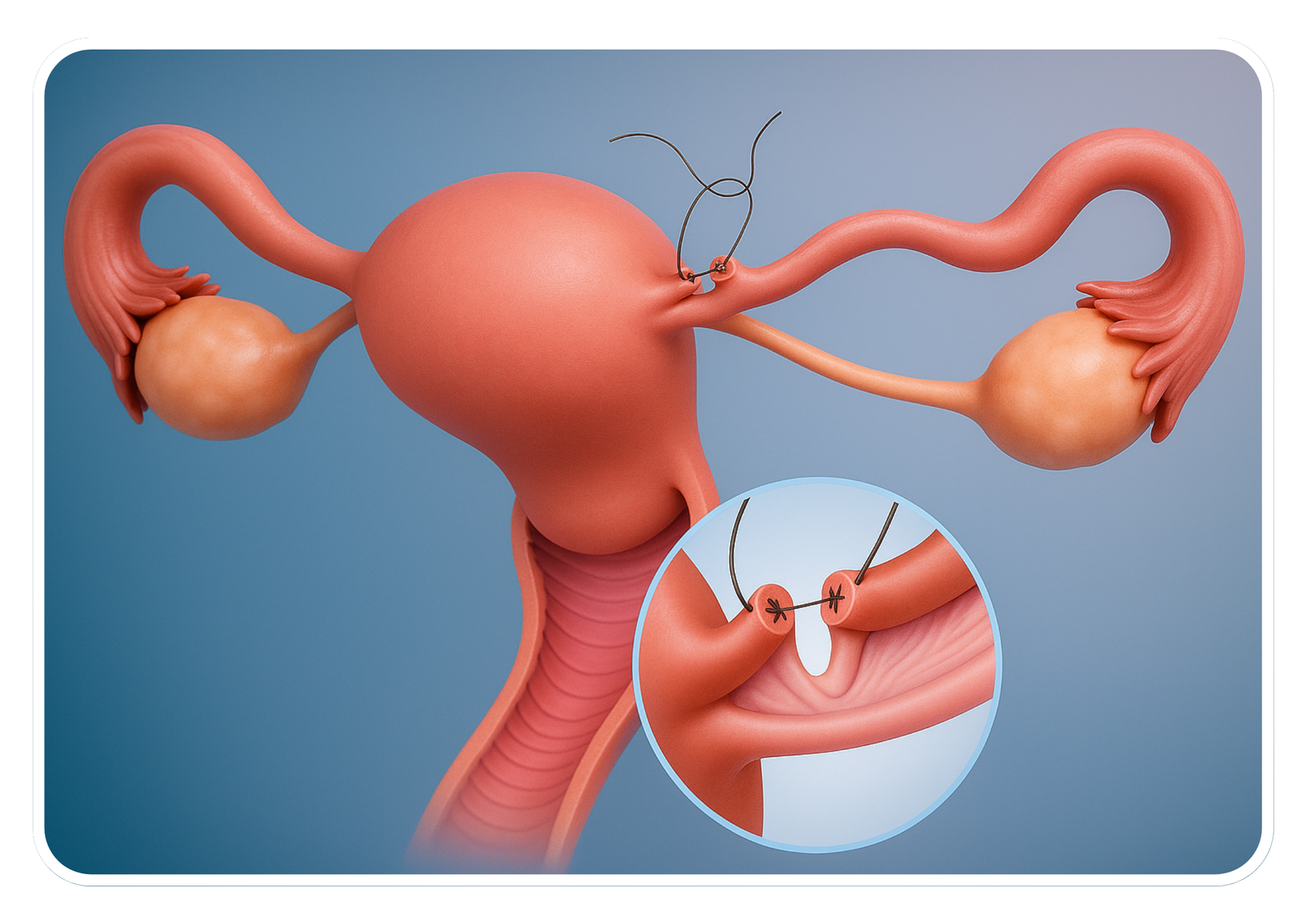
Tubal recanalization is a fertility-restoring surgical procedure performed on women who have undergone tubal ligation (family planning surgery). During tubal ligation, the fallopian tubes are cut, tied, or blocked to prevent pregnancy. However, tubal recanalization reverses this process by rejoining the blocked segments of the fallopian tubes.
As a result, eggs can once again travel from the ovaries to the uterus, making natural conception possible.
Who Can Benefit from Tubal Recanalization?
Tubal recanalization is suitable for women who:
Have previously undergone tubal ligation
Wish to conceive naturally again
Have adequate healthy tubal length remaining
Are below or around 40 years of age (though age alone is not a strict limit)
Have no major uterine abnormalities
Have a partner with normal sperm parameters
At Sparsh Hospital, every patient undergoes a detailed evaluation before recommending the procedure. This ensures the highest success rate and safety.
Common Reasons for Tubal Recanalization
Many women choose tubal recanalization due to:
Loss of a child
Change in marital status
Improved financial or emotional stability
Desire for another child after early sterilization
Regret after family planning surgery done at a young age
Whatever the reason, our specialists at Sparsh Hospital provide non-judgmental, supportive, and confidential care.
Types of Tubal Ligation That Can Be Reversed
Not all tubal ligations are the same. The success of tubal recanalization depends on the method used earlier, such as:
Pomeroy’s method
Modified Pomeroy
Falope ring method
Clip method
Partial salpingectomy
Our doctors carefully review previous surgical records and imaging reports to determine feasibility.
Pre-Procedure Evaluation at Sparsh Hospital
Before performing tubal recanalization, we conduct a thorough fertility assessment, including:
For Women:
Detailed medical and surgical history
Pelvic ultrasound
Hormonal tests
Hysterosalpingography (HSG) or laparoscopy (if required)
Assessment of ovarian reserve
For Male Partner:
Semen analysis
This step-by-step evaluation helps us choose the best treatment approach and avoid unnecessary risks.
Tubal Recanalization Procedure – Step by Step
1. Anesthesia
The surgery is performed under general anesthesia to ensure complete comfort.
2. Surgical Technique
At Sparsh Hospital, tubal recanalization is commonly performed using:
Microsurgical technique
Laparoscopic tubal recanalization (minimally invasive)
The surgeon removes the blocked segments of the fallopian tubes and carefully reconnects the healthy ends using fine sutures.
3. Precision & Care
Advanced magnification and delicate instruments are used to preserve tubal function and reduce scar formation.
4. Duration
The procedure usually takes 2–3 hours, depending on complexity.
Recovery After Tubal Recanalization
Recovery is usually smooth and faster, especially with laparoscopic surgery.
Hospital stay: 1–2 days
Mild pain or discomfort for a few days
Return to normal activities within 1–2 weeks
Avoid heavy work for at least 2 weeks
Our medical team provides detailed post-operative care instructions to ensure optimal healing.
When Can Pregnancy Occur After Tubal Recanalization?
Most women can start trying to conceive 2–3 months after surgery, once healing is complete.
In many cases:
Pregnancy occurs within 6–12 months
Natural conception is possible without IVF
However, results vary depending on age, tubal health, and overall fertility.
Success Rate of Tubal Recanalization
At Sparsh Hospital, the success rate of tubal recanalization depends on multiple factors, including:
Age of the woman
Type of previous tubal ligation
Remaining tubal length
Surgical technique used
Overall reproductive health
On average:
Pregnancy success rates range between 40% to 70%
Higher success is seen in younger women with healthy tubes
Our specialists focus on maximizing success while ensuring patient safety.
Advantages of Tubal Recanalization
Allows natural conception
No need for repeated IVF cycles
Cost-effective in the long run
One-time procedure
Preserves natural fertility
For many women, tubal recanalization offers emotional satisfaction by conceiving naturally.